Why I Built a Reader That Responds to the Actor, Not Just the Cue
As self-tapes moved more of the audition process onto the actor, one problem kept following me into rehearsal: a Reader can know when to speak without actually responding to the scene. That question eventually became OffBook Studio.
As an actor and filmmaker, I spend a lot of time thinking about what happens on both sides of the camera.
Filmmaking teaches you to control things. Frame the shot. Shape the light. Choose the lens. Cut at exactly the right moment.
Acting asks for something almost opposite.
Prepare everything you can, then allow yourself to be affected by what happens in front of you.
That tension became especially obvious to me as self-taping became a larger part of auditioning.
An audition arrives. You get the sides. Maybe it is late at night. Maybe you have a few hours. Maybe another actor is available tomorrow, but you want to start working tonight.
So you begin rehearsing alone.
And that is where I kept running into the same problem.
It was not simply that I needed somebody to say the other lines.
I needed something to respond to.
Rodrigo Lopresti in his self-tape setup, where acting, camera, lighting, sound, rehearsal, and Reader logistics all become part of the modern audition process.
Knowing When to Speak Is Only Part of the Problem
Actor rehearsal apps and self-tape Reader apps have become much better at solving one important problem: knowing when the Reader should say the next line.
That matters enormously.
A useful Reader cannot simply fire the next line because there has been a moment of silence. Actors pause. We breathe. We hesitate. We search. Sometimes the most important thing happening in a scene occurs between the words.
When I began building OffBook Studio, one of the first things I cared about was making rehearsal responsive to the actor's actual spoken cue rather than treating silence as permission to advance.
The app listens for the expected content of the actor's line and uses that information to decide when the scene should continue.
That helped solve the timing problem.
But after using the system over and over, another question began bothering me.
What if the Reader knew not only when to answer, but could respond to how I had just played the scene?
That became the more interesting problem.
The Difference Between Cue-Responsive and Performance-Responsive Rehearsal
A traditional prepared Reader performance can be incredibly useful.
In OffBook Studio's Classic Reader, an actor can choose a ready-made Reader voice or record the Reader performance themselves. If you want the other character to whisper, rush a line, challenge you, soften, hesitate, or come at you harder, you can build that performance intentionally.
That Reader performance then stays consistent.
For learning audition sides, running lines repeatedly, preparing a self-tape, or exploring a scene against something dependable, consistency is often exactly what you want.
There is real value in repetition.
But repetition creates a strange problem too.
Eventually, you know what is coming.
You know exactly how the other line will sound.
You know its rhythm.
You know its energy.
You know where the pause is.
And if you are not careful, rehearsal can slowly shift from responding to anticipating.
You begin performing the memory of the scene rather than encountering the scene again.
That is the point where I started thinking about a different kind of Reader.
OffBook Studio during a solo rehearsal and self-tape setup on iPhone.
What If the Reader's Performance Could Change Too?
That question eventually became Interactive LIVE Mode in OffBook Studio.
The idea is simple to describe even though the problem was not simple to build:
The Reader's dialogue stays locked to the script, but the performance of that dialogue can respond to the performance the actor just gave.
If the actor changes the energy, urgency, pace, tension, intimacy, or rhythm of the scene, the next Reader line can arrive differently too.
The words do not change.
The scene does not suddenly become improvisation.
The Reader does not rewrite the script.
Instead, the exact assigned Reader line is performed fresh in response to what just happened.
That distinction became the foundation of the system:
The word cue determines when.
The script determines what.
Interactive LIVE affects how.
For me, that is the difference between a Reader that merely follows the scene and one that can participate in the rhythm of it.
The Script Has to Stay the Script
Keeping Interactive LIVE script-locked was extremely important to me.
Actors preparing an audition are not usually looking for somebody to invent better dialogue.
We have sides.
Those words matter.
Casting expects those words.
The writer wrote those words.
So Interactive LIVE is not designed to improvise another character's dialogue, add commentary, invent story beats, or decide what should happen next.
The Reader's line remains the Reader's line.
What changes is the relationship to it.
If I play the preceding moment differently, I want the possibility that what comes back to me feels different too.
The script stays the same. The relationship to it doesn't.
That was the thing I had been missing when rehearsing scenes alone.
Interactive LIVE Mode in OffBook Studio. The script stays locked while the Reader’s performance responds to how the actor just played the scene.
Why This Matters to Me as an Actor
There is a profound difference between memorizing lines and rehearsing a scene.
You can learn dialogue by yourself.
You can repeat it until the words are completely automatic.
That is useful work.
But acting does not happen entirely inside one person.
A scene is an exchange.
Something reaches you, affects you, and changes what you do next.
Even in a self-tape, where another actor may be standing off camera reading from a laptop, that relationship still matters.
The Reader's timing matters.
Their rhythm matters.
Whether they are listening matters.
What they give you can change what becomes available in your own performance.
When another actor is available, there is no technology I would choose instead of actually working with them.
But another actor is not always available for the hours of rehearsal that happen before the tape.
That reality is what OffBook Studio was built around.
The Meisner Connection
I trained as an actor in the Meisner tradition, and one idea from that work has stayed with me throughout my career: your attention belongs on what you are receiving, not on manufacturing a result inside yourself.
Interactive LIVE was designed around an acting principle central to Meisner training: what you receive from your partner should affect what happens next.
That does not make OffBook Studio a Meisner training system.
It is not.
And Interactive LIVE is not a substitute for working with another actor.
But the acting principle matters to the design.
If rehearsal becomes completely predictable, it becomes very easy to stop receiving.
You begin waiting for the thing you already know is coming.
I wanted to see whether technology could preserve a little more uncertainty inside solo rehearsal.
Not chaos.
Not improvisation.
Just enough responsiveness that the actor still has something to encounter.
Classic Reader and Interactive LIVE Solve Different Problems
I do not think of Interactive LIVE as replacing the Classic Reader.
They are useful for different reasons.
Classic Reader is faster, repeatable, and predictable in the best sense of the word.
If I am learning a scene, testing choices, preparing audition sides, or trying to get repetitions under my belt, consistency is incredibly useful.
Interactive LIVE is intentionally less fixed.
It generates a fresh performance of the next assigned Reader line after responding to how the actor just played the preceding moment.
That makes it better suited to exploration and spontaneity.
One gives you a Reader performance you control.
The other gives you a Reader performance that responds.
There are days when I want one and days when I want the other.
Self-Taping Changed More Than the Camera
One reason I built OffBook Studio is that self-taping quietly transferred an enormous amount of the audition process onto actors.
We became responsible for the camera.
The lighting.
The sound.
The framing.
The Reader.
The rehearsal.
The edit.
The upload.
And somewhere underneath all of that machinery, we are still supposed to act.
Technology for actors interests me most when it removes some of that machinery from our attention.
Not when it becomes the center of the experience.
That is why I have never been particularly interested in building technology simply because the technology itself is impressive.
The question I keep coming back to is much simpler:
Does this give the actor more room to act?
If it does not, I am not sure it is solving the right problem.
Rodrigo Lopresti working through audition sides alone. The point of rehearsal technology is not to replace another actor, but to give the performer something useful to work against when nobody else is available.
Built for the Hours When Nobody Else Is There
A great scene partner is irreplaceable.
A generous Reader can change an audition.
A coach can open a scene in ways software never will.
Interactive LIVE was not built to argue otherwise.
It was built for the other hours.
The hour when the sides arrive late.
The afternoon when you want to run the scene twenty times.
The night before the tape when nobody is free.
The stretch of rehearsal before you are ready to ask another person to give you their time.
Those hours are increasingly part of being an actor.
And I wanted something in those hours that did more than wait for me to finish speaking.
I wanted something that could listen to the performance and let the next moment come back a little differently.
That became OffBook Studio.
And eventually, it became Interactive LIVE.
Because knowing the cue was only the beginning.
The more interesting question was always:
What happens next because of what the actor just gave you?
Rodrigo Lopresti is a New York actor, filmmaker, and founder of OffBook Studio, an iPhone rehearsal and self-tape app built for actors.Jack O’Neill | North Star | Music Video
A one-day, performance-driven piece where the song is the apology. Jack returns to an old friend’s bar, plays North Star, and makes amends. Filmed and finished by RandM Pink Films.
Jack arrives at a neighborhood bar carrying two things, his guitar and a weight. He plugs in, keeps his eyes steady, and plays North Star. By the final chord, the distance in the room has changed.
Visually I kept it naturalistic and restrained, practical available lights, and a single RGB Tube Light. The camera movement; emotion lives in breath and driven actions.
Watch it here: Jack O'Neill - North Star (Official Video)
Credits:
Artist: Jack O’Neill
Written & Directed by: Rodrigo Lopresti
DP / Editor / Color: Rodrigo Lopresti (RandM Pink Films)
Cast: Jack O’Neill (artist), Jackson O’Neill (bartender), Joseph King (owner/old friend)
Location: Bushwick, NYC
AI Killed The Artist | 2025
A Documentary by Rodrigo Lopresti | RandM Pink Films
In an era of rapid technological acceleration, Why AI Killed The Artist poses a question that haunts every creator: what happens to art when machines learn to imitate the soul?
This short documentary, written and directed by Rodrigo Lopresti, explores the tension between artificial intelligence and human creativity. Through intimate narration, cinematic reenactments, and real-world examples, the film tracks the artist's journey from inspiration to obsolescence, or maybe resurrection.
“This isn’t just about AI replacing humans. It’s about what we lose when we stop valuing the story behind the art.”
Set against the backdrop of generative media, synthetic voices, and algorithm-driven storytelling, the documentary examines the emotional, philosophical, and creative toll of an AI-dominated creative industry. But more than that, it’s a call to arms, to remember why we make art in the first place.
Project Status
Watch it here: Why AI Killed The Artist
Themes Explored
The rise of generative AI in visual and written arts
Creativity vs computation
Why audiences crave human stories, even when machines can mimic them
The future of artistic identity in an AI age
Why This Matters
This is more than a documentary. It’s a cinematic manifesto.
If you're an artist, filmmaker, writer, musician, or even just a fan of stories, you’ll feel the impact.
Why AI Killed The Artist isn’t just predicting the future.
It’s documenting the present… before it disappears.
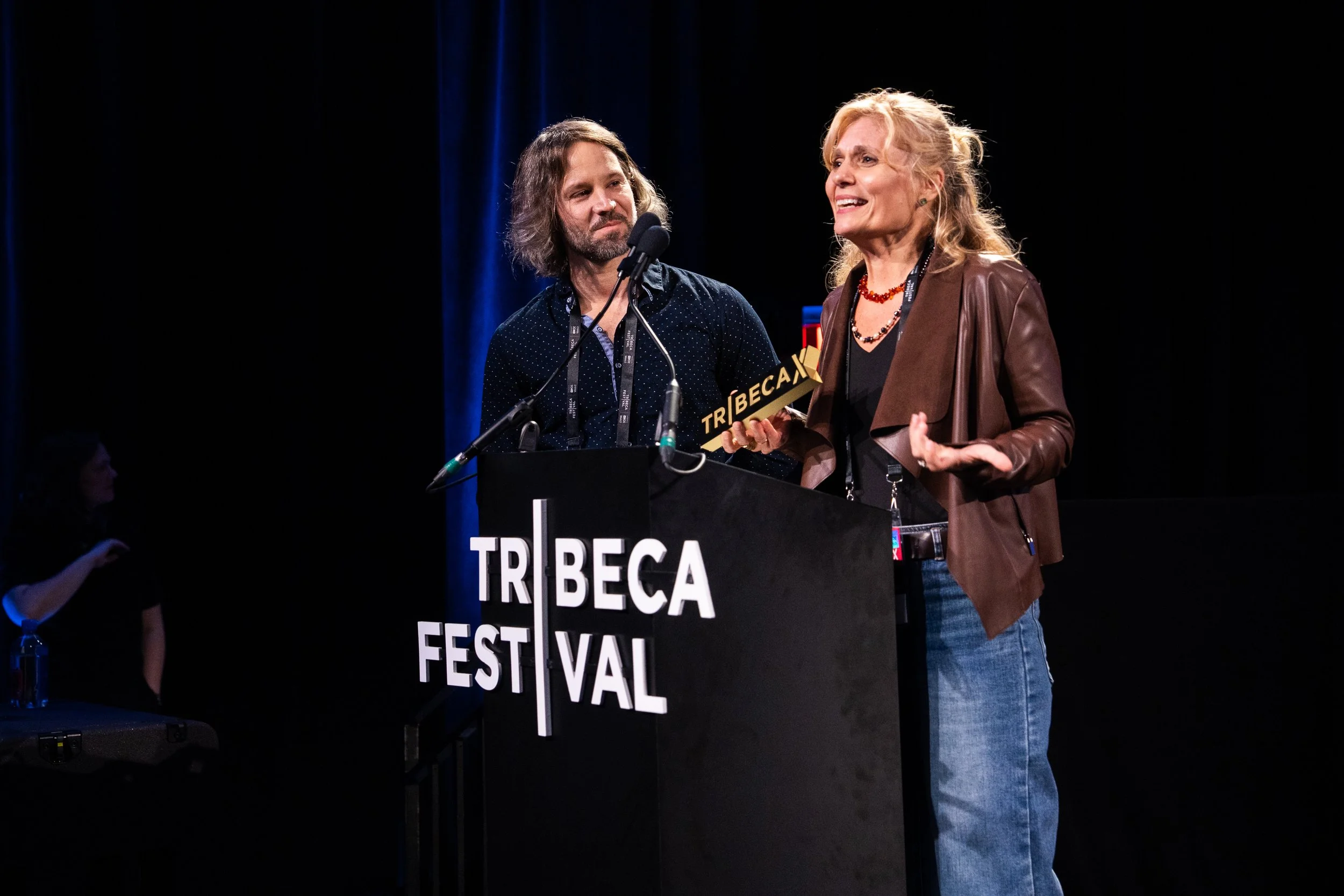
A VITAL SUN WINS 2025 TRIBECA X AWARD FOR ENVIRONMENTAL IMPACT
We're honored to announce that A Vital Sun, a short documentary shot and edited by Rodrigo Lopresti of RandM Pink Films, has been awarded the Environmental Impact Award at the 2025 Tribeca X Festival.
Narrated by Ben Stiller and directed by Alison Bartlett, A Vital Sun tells the powerful story of SEKEM, an Egyptian community that transformed desert land into a thriving sustainable ecosystem, blending agriculture, education, and social innovation.
Rodrigo handled the cinematography, editing, and color grading, shaping a visual narrative that highlights the beauty, hope, and transformative energy of the SEKEM project. This collaboration exemplifies RandM Pink Films' commitment to cinematic storytelling, documentary filmmaking, and impact-driven visual media.
🎬 Official Selection: Tribeca X 2025
🏆 Winner: Environmental Impact Award
From lens to cut, this film reflects the kind of human stories we live to tell: real, vital, and capable of reshaping the world.
A VITAL SUN | A CINEMATIC JOURNEY INTO EGYPT’S SUSTAINABLE HEART
SEKEM, a short documentary I had the privilege to edit and shoot, has been officially selected for the 2025 Tribeca X Awards. Narrated by Ben Stiller, this film delves into the inspiring story of the SEKEM community in Egypt—a pioneering initiative founded in 1977 by Dr. Ibrahim Abouleish. SEKEM, meaning "vitality from the sun," has transformed desert land northeast of Cairo into a thriving hub of sustainable agriculture, education, and social entrepreneurship.
Working on this project was a profound experience. Capturing the essence of a community that integrates biodynamic farming, holistic education, and cultural development challenged me to blend visual storytelling with deep respect for the subject matter. The cinematography aimed to reflect the harmony between humans and nature that SEKEM embodies, using natural light and thoughtful composition to mirror the community's ethos.
Editing the documentary required a delicate balance—honoring the narrative's authenticity while ensuring it resonated with a global audience. Ben Stiller's narration added a compelling layer, bringing attention to SEKEM's mission of sustainable development and social innovation.
Being part of a project recognized by the Tribeca X Awards is an honor, and it underscores the power of documentary filmmaking to spotlight transformative stories. This experience has deepened my commitment to creating content that not only informs but also inspires change.
BADLANDS | MUSIC VIDEO
This music video for Jack O’Neill’s song Badlands was shot in NYC and built around themes of intimacy, memory, and emotional tension. I leaned heavily on natural lighting, using only two softboxes and fast lenses to create an organic, lived-in look.
The goal was to let the emotion breathe in each frame — capturing the push-pull between two characters at a crossroads. The minimal gear setup let us move freely, keeping the performances raw and honest.
Directed, shot, and edited under RandM Pink Films, this project blends cinematography, editing, and color into a visual that feels both tender and untamed — like the track itself.
Watch it here: Jack O'Neill - Badlands (Official Video)